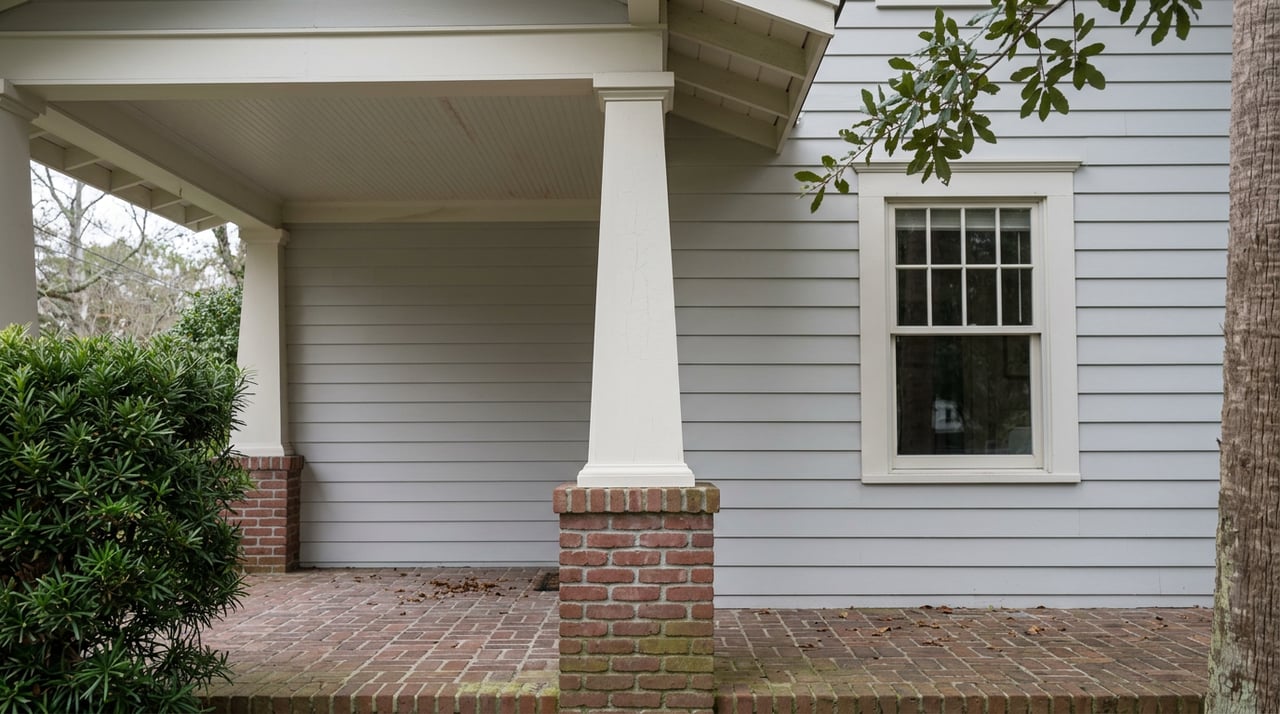
Two bungalows a block apart in Hyde Park can carry the same asking price, the same lot depth, even the same porch pitch, and still sit on opposite sides of a decision that has nothing to do with either house. One can be gutted, expanded, or torn down on a builder's normal schedule. The other enters a review process with a public hearing, a statutory clock, and a real chance the answer comes back no. The difference is a boundary line, and that line moved as recently as January 2023.
Most buyers comparing Hyde Park listings are pricing square footage, lot width, and proximity to Bayshore Boulevard. Those numbers matter, but they are not the number that determines whether your renovation budget survives contact with the city. That number is whether your specific parcel sits inside the locally designated Hyde Park Historic District, which is a smaller and more specific footprint than the neighborhood name on the listing sheet.
The Map Moved in 2023, Not Everyone Noticed
Hyde Park carries two separate historic designations, and they do very different things. The National Register listing is largely honorary. It opens the door to certain tax incentives but does not require anyone to ask permission before replacing a window. The locally designated Hyde Park Historic District is the one with teeth. Development inside it is reviewed by Tampa's Architectural Review Commission, and exterior work requires a Certificate of Appropriateness before a permit is issued.
That local district is not fixed. On January 5, 2023, the City of Tampa expanded it to the north, adding 184 buildings in the Hyde Park Spanishtown Creek Civic Association and Historic Hyde Park Neighborhood Association areas. A house that sat comfortably outside city review before that date can now require the same Certificate of Appropriateness process as a bungalow on the original historic core. A buyer working from an old mental map, or from a neighborhood guide written before 2023, is working from the wrong line.
Outside the locally designated district, in the broader South Tampa fabric that still carries the Hyde Park name, tear-down and rebuild is common, subject to the city's standard zoning code and tree protection rules. Inside it, demolition of a contributing structure is heavily restricted, and the city's own guidelines direct the Architectural Review Commission to favor repair and retention over replacement, following the Secretary of the Interior's Standards for Rehabilitation.
What a Certificate of Appropriateness Actually Buys You in Time
Ask any Tampa-based design-build team that works this neighborhood regularly and the answer is consistent. MTBH Studios, an architecture and construction firm active on Lemon Street, San Pedro, and the surrounding grid, puts the added time at 8 to 12 weeks for pre-construction on lots that fall inside the local district and require Certificate of Appropriateness review. That estimate covers projects that get resolved at the staff level. Anything that lands on the Architectural Review Commission's public hearing calendar instead runs on the commission's published meeting schedule, not the buyer's timeline.
Standard Hyde Park lots run 50 feet by 100 to 127 feet, which is narrow by South Tampa standards. Inside the local district, that narrow footprint has to be worked out against the Certificate of Appropriateness process at the same time it is worked out against setbacks and the city's increasingly strict impervious surface limits. Outside the district, the same lot dimensions still apply, but the design conversation with the city is shorter, because there is no exterior-review body weighing in on windows, roofline, or massing before the permit is issued.
Inside the Line vs. Outside the Line
| Inside the local historic district | Outside the local district (same broader Hyde Park area) | |
|---|---|---|
| Exterior changes | Require a Certificate of Appropriateness from the Architectural Review Commission | No historic-specific exterior review |
| Demolition of the existing structure | Heavily restricted for contributing buildings, reviewed case by case | Permitted under standard zoning and tree protection rules |
| Added pre-construction time | Roughly 8 to 12 weeks, per local design-build estimates, longer if a public hearing is required | Standard city permitting timeline applies |
| Governing standard | Secretary of the Interior's Standards for Rehabilitation, applied by city staff | City zoning code, tree protection ordinance, impervious surface limits |
The Question to Ask Before You Fall in Love with a Listing
None of this shows up automatically on a listing sheet. A property can be marketed as being in Hyde Park without any indication of which side of the 2023 boundary it sits on, or whether the structure itself is classified as contributing to the district. Before writing an offer on a fixer-upper or a lot with rebuild potential in this neighborhood, a few questions are worth answering first.
- Confirm whether the parcel falls inside the locally designated Hyde Park Historic District, using the city's current district map rather than an older reference.
- Ask whether the existing structure is classified as contributing or non-contributing. That classification, not the home's condition alone, drives how the commission treats a demolition request.
- If exterior changes are part of the plan, build 8 to 12 weeks of Certificate of Appropriateness review into the pre-construction timeline, and more if the project requires a public hearing rather than staff-level approval.
- Remember that standard zoning rules, tree protection, and impervious surface limits still apply outside the local district. Being outside the historic boundary does not mean being outside all city review.
For a design-forward buyer weighing a boutique renovation against a scrape-and-build, or a developer looking at a Hyde Park lot as one option among several South Tampa parcels, this is the diligence that determines whether the numbers on a pro forma survive the permitting process. It is also the kind of parcel-specific fact that only shows up when someone pulls the current district map and checks the address against it, rather than relying on the neighborhood name alone.
FAQ
If my house is just outside the local historic district, can I do whatever I want? No. Standard city zoning, tree protection rules, and Tampa's impervious surface limits still apply anywhere in the city. What disappears outside the local district is the Certificate of Appropriateness requirement and the Architectural Review Commission's authority over exterior design and demolition.
Does being on the National Register mean my house needs city approval to renovate? Not on its own. The National Register listing is largely honorary and can open the door to certain tax incentives, but it does not carry the same review authority as the locally designated Hyde Park Historic District. The local designation is the one that triggers Certificate of Appropriateness review.
Can a contributing structure inside the district ever be torn down? It is possible but far from automatic. Demolition of a contributing structure is heavily restricted, and the city's guidelines direct the Architectural Review Commission to favor repair and retention over replacement.
How do I find out which side of the line a specific address falls on? The City of Tampa publishes the current Hyde Park Historic District map alongside its design guidelines, and parcel-level status can be confirmed through the city's Architectural Review and Historic Preservation office before an offer is written.
If you are weighing a Hyde Park renovation project, a teardown lot, or simply want a second set of eyes on a parcel's historic status before you write an offer, Bianca Lopez works this neighborhood closely enough to know where the lines actually sit. Request Exclusive Access to get a straight read on what a specific address will and will not let you do.
This article is general information, not legal, tax or financial advice. Consult a qualified professional about your situation.